



The Complete Maltipoo Guide
Low-Shedding, Family Home Raised, ENS Trained
Meet Our Maltipoo Puppies
What Is a Maltipoo?
The Maltipoo is a cross between a purebred Maltese and a purebred Poodle, usually a Toy or Miniature Poodle. Breeders paired the two on purpose: the Maltese is gentle and deeply affectionate, and the Poodle is smart with a low-shedding coat. The result is a small, sociable dog that adapts well to a lot of different homes.
Maltipoos have been popular in the U.S. since roughly the 1990s, as more families started looking for small, low-shedding dogs. They still rank among the most requested designer breeds today, and it’s not hard to see why. They’re small enough for an apartment, they don’t shed much, and they get along well with kids, seniors, and first-time dog owners.
One thing a lot of people don’t realize until they already have one: Maltipoos bond hard with their people. It’s their best quality, and it’s also the thing most worth an honest conversation before you commit. More on that below.

Maltipoo Temperament and Personality
Maltipoos are affectionate, playful, and pick up on emotion easily. They do best when they’re part of family life, not left alone in a back room. They’re sensitive dogs that respond strongly to tone, which makes them great at reading people, but it also means harsh training methods backfire with this breed.
Companion Dogs First
Companionship is really the Maltipoo’s whole job. Both parent breeds were bred to be close to people: the Maltese as a lap dog for royalty, the Poodle as a working partner that stayed near its handler. Maltipoos inherit both instincts. They want to be with you, not just nearby.
Gentle with Children
When properly socialized, Maltipoos are patient and gentle with kids. Their small size, 5 to 12 pounds, means supervision with toddlers matters, since they can be hurt by rough handling or being dropped. With older children who know how to handle a small dog, they make great playmates.
Adapts to Other Pets
Maltipoos generally get along with other dogs and cats once properly introduced. Because of their size, early introductions to larger dogs should be supervised. A second pet often gives them good company when the family’s away.
Worth Knowing Before You Commit
Separation anxiety is real with this breed. Maltipoos bond deeply, sometimes intensely, with their main person. If your household is regularly empty for 8 to 10 hours with no plan for a dog walker, daycare, or second pet, a Maltipoo will struggle. Signs usually include barking, chewed items, and house-training regression. Our ENS training builds some stress resilience from birth, and we provide crate training guidance built for companion breeds. But the honest answer is that if you’re gone all day most days, this may not be the right breed for your house.
Dental care has to be consistent or it gets expensive. Small breeds have crowded teeth. Daily tooth brushing, not monthly, and a professional cleaning once a year are genuinely important for Maltipoos. Dental disease is the top health issue we see in small breeds, and it’s largely preventable with early habits. We walk every family through this at pickup or delivery.
How Big Do Maltipoos Get?
Maltipoos are small dogs, but size varies depending on which Poodle variety was used in the cross. Toy Poodle crosses produce smaller Maltipoos, and Miniature Poodle crosses run a bit larger. Both are manageable for apartment living, travel, and handling by kids and seniors.
| Type | Weight | Height | Full Size By |
|---|---|---|---|
| Toy Maltipoo | 5–8 lbs | 8–10 inches | 9–12 months |
| Miniature Maltipoo | 8–12 lbs | 10–12 inches | 9–12 months |
Maltipoos grow quickly in the first six months, reaching roughly 75% of adult size in that window. Most are fully grown by 9 to 12 months. Their small size makes them easy to travel with, and most fit in an airline-approved under-seat carrier.
Maltipoo Coat, Colors, and Grooming
Maltipoos have soft, low-shedding coats that range from wavy to curly depending on which parent they favor. The coat grows continuously, like human hair, which is why they shed so little but need regular grooming to stay comfortable.
Common Maltipoo coat colors: white, cream, apricot, red, brown, black, silver, and various parti-color combinations. Coat color often lightens some as a puppy grows into its adult coat.

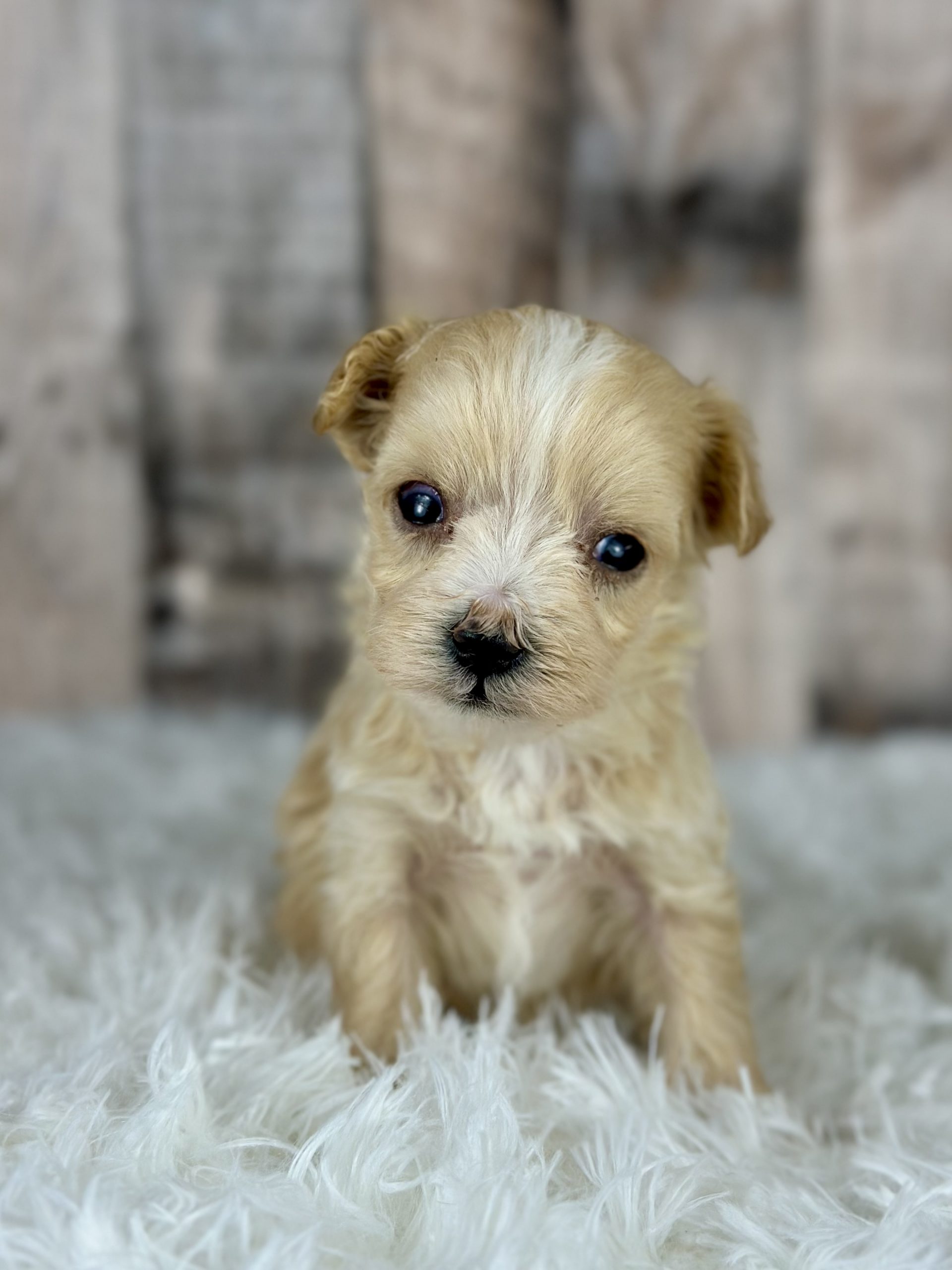
Grooming Requirements, Honestly
Maltipoos need professional grooming every 4 to 6 weeks, not every 6 to 8. Their coat grows faster than a lot of new owners expect, and waiting too long leads to matting that can only be fixed by shaving it down. Professional grooming runs about $45 to $75 per session in most areas, which adds up to roughly $500 to $900 a year. It’s a real, ongoing cost of owning a Maltipoo, so budget for it upfront.
Daily Brushing
Use a slicker brush and metal comb daily, not weekly. Pay extra attention behind the ears, in the armpits, and along the belly, where mats form fastest. Starting this habit while the puppy is young makes it routine instead of a fight.
Professional Grooming
Every 4 to 6 weeks for a full groom: bath, haircut, nail trim, ear cleaning, and anal glands. The “puppy cut” and “teddy bear cut” are the two most practical styles. Book the first appointment at 12 to 16 weeks so the experience starts off positive.
Bathing at Home
Bathe every 3 to 4 weeks between professional appointments with a gentle dog shampoo. Dry your Maltipoo completely; a damp coat left to air-dry can lead to skin issues, especially in the denser areas of the coat.
Maltipoo Health and Lifespan
Maltipoos typically live 12 to 15 years, sometimes longer with attentive care. As a small hybrid breed, they often get some benefit from hybrid vigor, generally having fewer breed-specific issues than either purebred parent. That said, health testing on the parent dogs still matters.
Health Conditions Worth Knowing About
- Patellar Luxation: A kneecap condition and the most common structural issue in small breeds. We check both parent dogs’ patellas before they produce a litter. Mild cases are often managed without surgery; severe cases need it.
- Progressive Retinal Atrophy (PRA): An inherited eye condition that causes gradual vision loss. It has known genetic markers, and our genetic panel checks parent dogs for these before breeding.
- Dental Disease: The top ongoing health issue in Maltipoos and small breeds generally. Crowded teeth trap plaque. Daily brushing and an annual professional cleaning are essential, not optional. Budget $300 to $600 a year for dental care at the vet.
- Cardiac Health: We include a cardiac check as part of our parent health screening for every breed we place, Maltipoos included, even though they don’t carry the specific cardiac risk tied to Cavalier King Charles Spaniels.
- Hypoglycemia: Low blood sugar, more common in very small Maltipoos under 5 pounds. Puppies should eat 3 to 4 small meals a day to keep blood sugar stable. We provide a feeding guide with every puppy and are available by phone if you notice symptoms.
What We Actually Test
Every parent dog in our program goes through a health check before producing a litter: a patella evaluation, a veterinary eye exam, a cardiac check, and a genetic panel covering the most common heritable conditions in Maltese and Poodle lines. We don’t just summarize this, we can show you the documentation directly. You’re welcome to review parent health records before you place a deposit.
Training Your Maltipoo
Are Maltipoos Easy to Train?
Yes, Maltipoos are among the easier small breeds to train. The Poodle side gives them real intelligence and an eagerness to please. They respond well to positive reinforcement: treats, praise, and play all work. What doesn’t work is harsh correction or a raised voice. These are sensitive dogs that shut down under pressure instead of complying.
Our ENS-trained puppies tend to start from an advantage. The Bio Sensor protocol is linked to stronger stress tolerance and faster learning, and families consistently tell us their puppy’s adjustment period was shorter than expected.
House Training Maltipoos
Maltipoos are house-trainable with consistency. Small breeds have small bladders, so puppies need to go out every 1 to 2 hours during the day, right after waking, and right after eating. A regular schedule, an enzymatic cleaner that fully removes urine scent, and consistent crate training is the most reliable combination. Most Maltipoos are reliably house-trained by 4 to 6 months.
Exercise Needs
Maltipoos need 20 to 30 minutes of daily exercise, easily covered by a couple of short walks and some indoor play. They adapt to their family’s pace and do fine in apartments. Mental stimulation matters too: puzzle feeders and short training sessions keep them engaged and head off the boredom that leads to barking or chewing.
Barking
Maltipoos are alert dogs and will announce visitors and unusual sounds. With consistent training they’re not excessive barkers, but alert barking is a real trait to expect. Teaching a “quiet” command early, and rewarding silence rather than just ignoring the barking, works best. Early exposure to a range of sounds and situations helps cut down on reactive barking.
Our Maltipoo Program: What Actually Goes Into Every Puppy
We work with a small group of families who raise Maltipoo puppies the way we require: in their own homes, handled every day, socialized from birth. Every family in our program follows the same standards. Here’s what that means in practice.
Early Neurological Stimulation (Days 3–16)
Every puppy receives our complete ENS protocol during the developmental window where this kind of stimulation produces lasting benefits. Five specific exercises are performed individually on each puppy, every day, for fourteen consecutive days: tactile stimulation, thermal stimulation, head-held-erect, head-held-inverted, and supine positioning. The documented outcomes, stronger cardiovascular response, stronger adrenal systems, greater stress tolerance, and faster adaptation, matter a lot for a companion breed that will spend its life around new environments and people.
Socialization in a Family Home
The critical socialization window for dogs is 3 to 12 weeks, almost entirely before your puppy comes home. What happens during that window shapes how a dog handles new experiences for the rest of its life. Our puppies grow up in family homes around the normal sounds of daily life: the kitchen, the TV, the doorbell, different voices, kids, different floor textures. They’re handled daily by adults and children. By the time they leave, a new environment isn’t scary, just different.
Health Testing and Documentation
Every parent dog goes through a health check before producing a litter: a patella evaluation, a veterinary eye exam, a cardiac check, and a genetic panel. Documentation is available before you place a deposit. We’d rather show you the records than ask you to take our word for it.
What Every Maltipoo Puppy Includes
- 2-Year Written Health Guarantee: A legally binding contract covering genetic and hereditary conditions confirmed by a licensed vet. Read the full terms here before you place a deposit.
- Current Vaccinations and Deworming: An age-appropriate schedule following AAHA guidelines, fully documented for your vet to continue.
- Registered Microchip: Registered to your name before your puppy leaves.
- 30 Days of Trupanion Pet Insurance: Free coverage during the first weeks home, when surprise vet visits are most likely.
- Breed-Specific Care Guide: Covers daily brushing technique, dental care from week one, grooming timing, crate training, house training, and feeding for a small-breed metabolism.
- Lifetime Support: Call or text Dan and Melissa any time with questions about grooming, behavior, health, or training. We’re here for the life of your dog.
Pricing and Deposit
Maltipoo puppies range from $1,500 to $2,200 based on coat color, markings, and parent lineage. A $200 refundable deposit holds your puppy. Nationwide delivery is available. Call (330) 238-8997 for delivery pricing to your area, or schedule free pickup at Deer Run Park, 3102 Glen Drive, Millersburg, OH 44654.
Maltipoo vs. Cavapoo vs. Teddy Bear: Which Is Right for You?
All three breeds we specialize in are low-shedding and considered easier on allergies, and all are suited to family life. Here’s how they actually compare.
| Trait | Maltipoo | Cavapoo | Teddy Bear (Shichon) |
|---|---|---|---|
| Adult Weight | 5–12 lbs | 8–25 lbs | 9–15 lbs |
| Energy Level | Moderate | Moderate–High | Low–Moderate |
| Best For | First-time owners, apartments | Active families, kids | Seniors, quieter homes |
| Separation Anxiety Risk | Higher | Moderate | Higher |
| Trainability | Very High | Very High | High |
| Grooming Frequency | Every 4–6 weeks | 4–8 weeks (coat-dependent) | Every 4–6 weeks |
| Key Health Watch | Dental disease, patellar luxation | Cardiac (MVD), breed-specific | Dental disease |
| Lifespan | 12–15 years | 12–15 years | 12–15 years |
If you’re still deciding between breeds, call us. We’d rather help you find the right fit than place a puppy in a home that isn’t a good match for it.
Frequently Asked Questions About Maltipoos
Maltipoos are low-shedding and produce less dander than most breeds, which is why they’re often described as hypoallergenic. Both parent breeds have hair-like coats rather than typical fur, and most allergy sufferers do noticeably better with Maltipoos. That said, no dog is truly 100% allergy-free. People react to proteins in dander, saliva, and urine, not just shed hair. If your allergies are severe, spend time with an adult Maltipoo before committing to a puppy.
Our Maltipoo puppies range from $1,500 to $2,200 depending on coat color, markings, and parent lineage. A $200 refundable deposit holds your chosen puppy. Every puppy includes ENS training, a 2-year written health guarantee, health-tested parents, vaccinations, a registered microchip, and 30 days of Trupanion pet insurance. Nationwide delivery is available. Call (330) 238-8997 for delivery pricing to your area.
Maltipoos typically weigh 5 to 12 pounds and stand 8 to 12 inches tall. Size depends on whether the Poodle parent was Toy or Miniature; Toy crosses produce smaller Maltipoos. Most reach full adult size by 9 to 12 months, though some keep filling out until 12 to 15 months.
Yes. This is a real breed trait worth understanding before you bring one home. Maltipoos form deep bonds and were bred specifically as companions. If your household is regularly empty for 8 to 10 hours with no plan for a dog walker or daycare, a Maltipoo will likely struggle. Our ENS training builds some stress resilience, and we provide crate training guidance built for companion breeds. Call us if this is a concern. It’s worth an honest conversation before you decide.
Professional grooming every 4 to 6 weeks, plus daily brushing at home. Their continuously growing coat mats quickly without regular maintenance, especially behind the ears and in the armpits. Professional grooming costs $45 to $75 per session in most areas, which adds up to $500 to $900 a year. Plan for this cost before you commit. We include a grooming guide with every puppy covering daily brushing technique, first appointment timing (12 to 16 weeks), and how to talk to your groomer.
Yes, with appropriate supervision. Maltipoos are patient and gentle with children who handle them correctly. Their small size, 5 to 12 pounds, means supervision with toddlers matters, since they can be hurt by being dropped or handled roughly. With older children who understand how to interact with a small dog, they’re great companions. Our ENS-trained puppies tend to be more confident and less reactive around kids from day one.
The most common concerns are dental disease (the top issue in small breeds; daily brushing matters), patellar luxation (a kneecap condition we check parent dogs for), progressive retinal atrophy (a hereditary eye condition), and hypoglycemia in very small puppies (managed with a consistent feeding schedule). With health-tested parents, daily dental care, and regular vet visits, most Maltipoos live 12 to 15 healthy years.
Early Neurological Stimulation is a protocol that traces back to U.S. military research. Five specific handling exercises are performed individually on each puppy from day 3 through day 16, the developmental window where this kind of stimulation produces lasting benefits. The documented outcomes include stronger cardiovascular performance, stronger adrenal and immune systems, greater stress tolerance, and faster adaptation to new environments. Every puppy we place receives the full ENS protocol. Learn more about ENS training.
Reserve your Maltipoo with a $200 fully refundable deposit. The deposit holds your chosen puppy and applies toward the total balance at delivery. Browse our available puppies page or call or text us at (330) 238-8997 to discuss current availability, expected litters, and delivery options to your area.
States We Serve
We deliver Maltipoo puppies nationwide. Select your state for local resources and delivery details.
Ready to Find Your Maltipoo?
Call or text Dan and Melissa directly. We’ll answer every question honestly, walk you through what’s currently available, and help you figure out if a Maltipoo is the right fit for your family and lifestyle.